.jpg)
First Time Farm Stay Tips Australia: A Beginner’s Guide to Rural Escapes

Updated: Oct 15
Camping update: Hidden Camp is closed to campers for now, and there's no reopening date yet. We've kept this guide up so it's ready for when we reopen. Get reopening news (free), or sponsor one of our animals in the meantime. Marvin, our grand old campsite inspector, is still on duty.
Picture this: you've finally swapped the hum of the city for the rustle of dry grass and the scent of eucalyptus, but as you pull up to the farm gate, a sudden wave of "what if I do something wrong?" hits you. It's a common feeling for many city dwellers looking to reconnect with the land. Whether you're worried about your toddlers getting too close to a steer or wondering how you'll survive without a power outlet for 48 hours, these first time farm stay tips Australia are designed to settle those nerves. We know that the transition from a suburban backyard to a working property can feel a bit daunting, especially when it comes to those unspoken paddock rules.
We believe that everyone deserves a slice of rural peace without the stress of the unknown. In this guide, we'll help you master the art of the rural escape, from choosing the right Queensland spot to packing the gear that actually matters. You'll learn the essentials of farm etiquette, how to safely introduce the kids to livestock, and what to expect when you go off-grid. Let's get you ready for a weekend where the only thing you have to worry about is whether you've brought enough marshmallows for the fire.
Key Takeaways
Master the essential "Paddock Rules" of gate etiquette and biosecurity to ensure both your family and the livestock stay safe.
Use our first time farm stay tips Australia to decide whether an unpowered campsite or a self-contained tiny house best fits your sense of adventure.
Learn how to pack the right gear, from sturdy boots to reliable headlamps, so you can handle off-grid living with total confidence.
Understand the "leave-no-trace" mindset required to protect the beautiful Queensland landscape and keep the bush pristine for everyone.
Discover how a 169-acre property like Hidden Camp Glenwood offers the perfect balance of rural discovery and quiet restoration.
Table of Contents
What Exactly is an Australian Farm Stay?
A farm stay is more than just a place to sleep; it is a gateway to a slower way of life. At its heart, what is a farm stay? It is an invitation to stay on a working or boutique rural property, where the rhythms of the land dictate the pace of your day. Unlike a standard hotel or a crowded caravan park, a farm stay offers a genuine connection to the Australian bush. You might find yourself pitching in to feed the cattle or simply watching the sun dip below the horizon with a cold drink in hand. It is this spectrum of active participation versus passive relaxation that makes it so appealing. You choose the level of engagement that fits your soul.
If you are looking for first time farm stay tips Australia, the first thing to understand is that this experience beats a standard caravan park every time. Forget being packed in like sardines. Here, your closest neighbours are likely to be a mob of kangaroos or a curious cow. You get total peace, wide-open spaces, and a sky so full of stars it feels like you could reach out and touch them. Prepare for the real Australia. There will be a bit of dirt on your boots, the air will smell of eucalyptus, and the sunrises will be worth every second of lost sleep.
The Different Types of Farm Accommodation
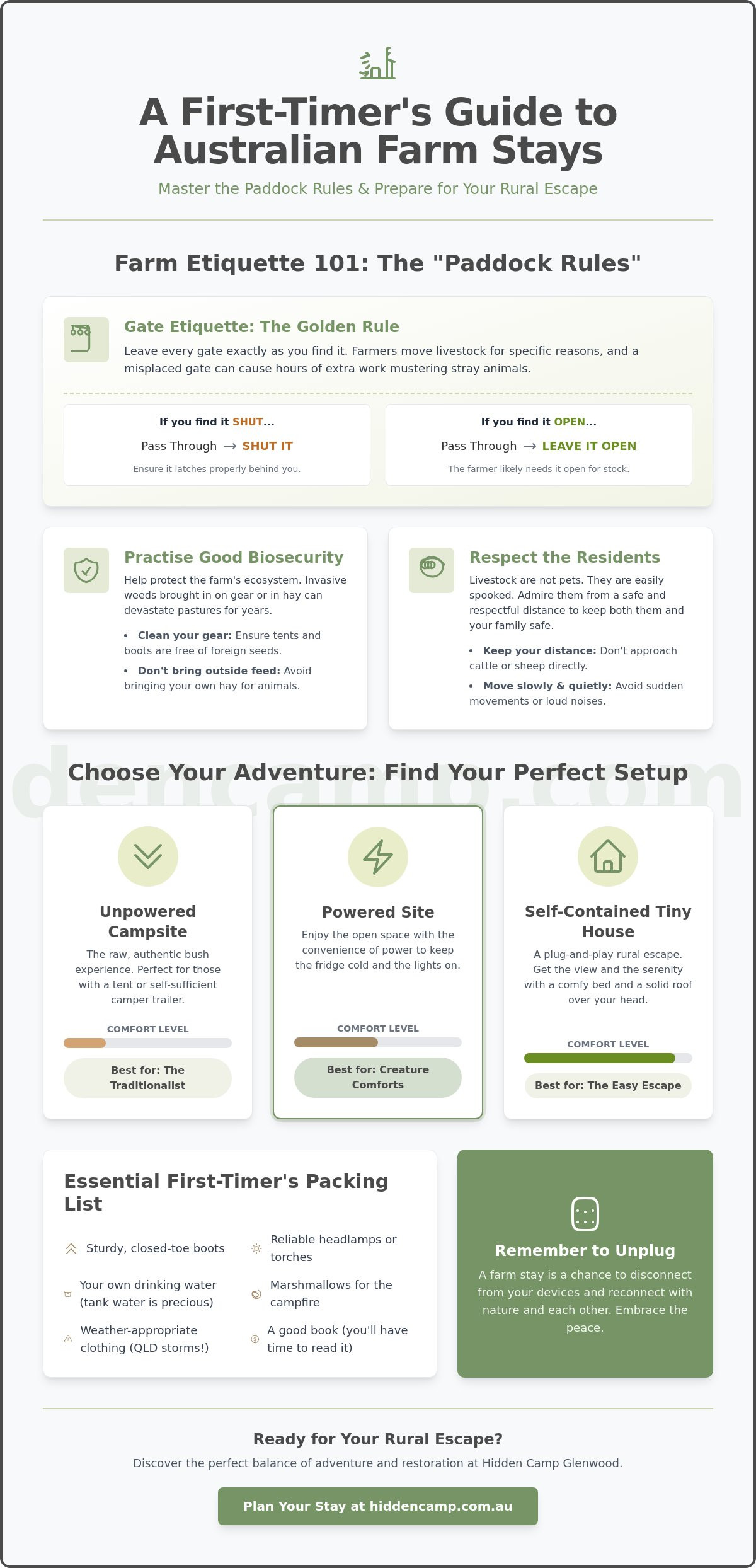
Every traveller has a different comfort level, and farm stays cater to them all. If you want the raw, authentic experience, look for unpowered sites. These are perfect for those with a bush-ready tent or a sturdy camper trailer. For a deeper look at this style, check out this ultimate guide to unpowered campsites. If you prefer a few more creature comforts, powered sites allow you to keep the fridge cold and the lights on. For those who want the view without the gear, self-contained tiny houses offer a plug-and-play entry point, providing a cosy bed and a roof over your head from the moment you arrive.
Why Queensland Farm Stays are Unique
Staying in Queensland brings its own magic. The landscape shifts from the lush, green hinterland to the rugged, golden scrub found in regions like Glenwood. It is a diverse environment that demands a bit of respect. You'll need to plan for the intense QLD sun and those sudden, dramatic afternoon storms that clear the air. The wildlife is part of the charm too. Expect a boisterous wake-up call from the kookaburras at 5 am. It is nature's alarm clock, reminding you that the best part of the day has already begun. This is why many people seek out first time farm stay tips Australia to ensure they're ready for the unique blend of heat, dust, and incredible natural beauty.
Understanding the "Paddock Rules": Farm Etiquette 101
Entering a working property is a special privilege. It is an opportunity to step into a world that operates on a different clock. One of the most vital first time farm stay tips Australia involves the humble gate. The rule is simple: leave it exactly as you found it. If it is shut, make sure it latches properly behind you. If it is open, leave it wide. Farmers move their stock between paddocks for specific reasons; a single mistake here can lead to a long night of mustering wandering cattle.
Biosecurity is another cornerstone of a successful Australian farm stay experience. It sounds like a technical term, but it really just means protecting the land from outside threats. Avoid bringing your own hay or uncleaned camping gear that might carry invasive seeds. Weeds can devastate a pasture and take years to eradicate. By being mindful of what you bring onto the property, you help preserve the health of the local ecosystem for the long term.
Respect the residents. Livestock are not pets; they are easily spooked by sudden movements or loud noises. Admire them from a distance. If you have kids, help them understand that cattle and sheep need their space to feel safe. This respect extends to light and noise too. Keep your campsite lights low at night to enjoy the stars, and let the sounds of the bush take centre stage. Applying these first time farm stay tips Australia helps you move from being a visitor to being a part of the farm community for a few days. If you're ever unsure about the local etiquette, just ask; we love helping guests settle into the rhythm of life at Hidden Camp.
Water and Waste Management
In the bush, every drop of water is precious. Most properties rely on tank water, which is entirely dependent on the last rainfall. It is best practice to bring your own supply of drinking water to ensure you have plenty. Remember the "Take In, Take Out" policy. Use biodegradable soaps and detergents to keep the greywater safe for the soil.
Fire Safety in the Bush
Fire is a serious responsibility in rural Australia. Always check for local fire bans before you even think about striking a match. If fires are permitted, stick to the designated pits to avoid damaging the pasture or starting a grass fire. Never leave a flame unattended. Before you head to bed, drench your coals with water until they are cold to the touch. This simple habit keeps the property and the surrounding community safe from harm.
Choosing Your Setup: Camping vs. Tiny Houses
Deciding how you want to sleep under the stars is a big part of the adventure. Assessing your gear honestly is one of the most practical first time farm stay tips Australia travellers should consider before hitting the road. Are you a seasoned camper with a "bush-ready" tent and a reliable setup, or are you a "glamper" at heart who prefers a solid roof? There is no wrong answer here; it's all about what makes you feel most at peace. While a commercial caravan park might offer concrete pads and rows of neighbours, a farm stay provides a sense of secluded camping that is hard to find elsewhere. You are often trading communal camp kitchens for a private patch of grass and a view that belongs only to you.
The unpowered campsite is the heartbeat of the rural experience. It offers a chance to truly disconnect and live by the sun. If you are leaning towards this "back to basics" approach, we recommend a deep dive into this ultimate guide to unpowered campsites to ensure you're fully prepared. On the other hand, if the thought of setting up a tent makes you break a sweat, our self-contained tiny houses offer all the farm charm with the added luxury of a proper bed and a hot shower. It is the perfect middle ground for those who want to experience the scrub without giving up their morning comforts.
Is an Unpowered Site Right for You?
Choosing an unpowered site requires a bit of forward planning. You'll need to think about managing your own power with solar panels or portable power banks to keep your devices charged and your esky cold. Cooking moves from a kitchen to a camp stove or an open fire, which turns every meal into an event. The biggest shift, however, is mental. Embracing the lack of Wi-Fi and the silence of the bush is where the real restoration happens. It is about trading the scroll of a phone for the crackle of a campfire.
The Tiny House Experience
For couples seeking a romantic getaway, a tiny house is often the ultimate choice. These spaces are designed to provide a "home away from home" feel, usually including fresh linens and basic kitchenware so you can arrive with just your weekend bag. They have a minimal footprint, aligning perfectly with the sustainable ethos of a working farm. You get to enjoy the vastness of the 169-acre property during the day and retreat to a cosy, protected sanctuary when the temperature drops at night. It is a simple, polished way to enjoy first time farm stay tips Australia without needing a garage full of camping equipment.
The Essential First-Timer Packing List
Arriving at your campsite only to realise you've forgotten a torch or a warm jumper can quickly dampen the spirits of even the most enthusiastic adventurer. When it comes to first time farm stay tips Australia, being prepared is the difference between a restless night and a restorative escape. The Queensland scrub is beautiful, but it is also an environment that demands a bit of practical gear. Think about your daily needs through a rural lens. Everything you bring should serve a purpose, helping you settle into the quietude of the bush without a hitch.
Light is your best friend once the sun dips below the treeline. Headlamps and lanterns are non-negotiable for those midnight toilet runs or for simply finding your way around the camp kitchen. Footwear is equally critical. While thongs are great for the beach, they have no place in a working paddock. Sturdy boots or closed-in shoes will protect your feet from uneven ground, prickles, and the occasional curious insect. You'll also need high-SPF sunscreen and "industrial strength" insect repellent to handle the local mozzies. Don't be fooled by the daytime heat either. The air in the scrub gets surprisingly chilly at night, so pack plenty of layers to stay cosy by the fire.
The "Must-Haves" for Your Kit
Building a reliable kit takes the guesswork out of your trip. We've put together a comprehensive guide on what to pack for farm stay camping to help you tick off the essentials. Your first aid kit should be robust, including a snake bite kit and plenty of antiseptic for those inevitable scratches from the long grass. Since you'll be unplugged, bring along some old-school entertainment. Books, a deck of cards, or a board game are perfect for those quiet evenings when the only sound is the crackle of the fire and the distant call of a mopoke.
Food and Drink Prep
Keep your meals simple and satisfying. One-pot wonders like stews or pasta dishes are the kings of the campsite, requiring minimal cleanup and equipment. Storage is vital. Make sure your food is secured in sturdy bins or an esky that can't be easily opened by curious possums or kookaburras looking for a snack. Water management is your most important task. As a safety margin, aim to carry at least 5 litres of water per person per day. This ensures you have enough for drinking, cooking, and basic hygiene without ever feeling the pinch. Ready to put your packing skills to the test?
Planning Your Escape to Hidden Camp Glenwood
Hidden Camp Glenwood is tucked away in the heart of the Fraser Coast region, positioned as a comfortable drive for those coming from the Sunshine Coast or Brisbane. When you pull through the gate, you are greeted by 169 acres of authentic Queensland bush and rolling pasture. Wide skies. Fresh air. Total peace. It is a place where the air feels lighter and the pace of life slows down immediately. We offer a variety of ways to experience this landscape, ranging from solo unpowered campsites for those who want to rough it to self-contained tiny houses for a more polished retreat. Our promise to you is a warm, unpretentious welcome from hosts who are deeply connected to this land and its history.
Apply these first time farm stay tips Australia to help you transition from the city mindset to the steady rhythm of the farm. We believe that a successful stay is built on honesty and transparency, which is why we encourage our guests to explore every corner of the property. Whether you are wandering through the scrub or watching the cattle graze from your campsite, you'll find that the space here is yours to discover. We take pride in being a relatable guide for your journey, ensuring you feel both excited and safe as you navigate this new environment.
What Makes Hidden Camp Different?
The heart of our philosophy is restoration. We provide a necessary departure from the pressures of modern life, offering a "quiet corner" in Glenwood where you can truly switch off. Our guests value the "hidden gem" factor of our property, often choosing the seclusion of our 169 acres over the hustle of crowded tourist hubs. We are genuinely passionate about the farm stay camping Queensland lifestyle. This commitment means we focus on the simple joys, like a perfectly built campfire or the sound of the wind through the gum trees, rather than industry jargon or artificial experiences.
When camping reopens
Camping at Hidden Camp is on a break, and there's no reopening date yet, so we're not taking bookings right now. If this sounds like your kind of escape, join the free reopening list and you'll be the first to know when sites open again. In the meantime the animals are still here (and still hungry): you can sponsor one from $3 a month, including Marvin, our grand old campsite inspector.
Step Out of the Grind and Into the Scrub
Taking that first step into rural life is about more than just a change of scenery; it's about finding a rhythm that matches the land. By mastering basic paddock etiquette and packing for the unique Queensland climate, you've already done the hard work. These first time farm stay tips Australia are your toolkit for a stress-free escape where the kids can safely discover nature and you can finally hear yourself think. Whether you choose the simplicity of an unpowered site or the comfort of a tiny house, the goal remains the same: restoration.
At Hidden Camp, we offer 169 acres of private Queensland scrub for you to explore at your own pace. As a family-operated boutique campground, we take pride in being a Glenwood hidden gem where honesty and peace come first. We've seen firsthand how a weekend of campfires and starlight can reset the soul. The kookaburras are waiting to welcome you to the quiet side of life.
Frequently Asked Questions
Do I need a 4WD to get to a farm stay in Queensland?
Most Queensland farm stays are accessible via standard 2WD vehicles, though the final stretch might be a well-maintained gravel track. It is always best to check the specific property description before you set off from the city. If the weather has been particularly wet, some unsealed roads can become slippery, so keep an eye on the local Glenwood forecast before your journey begins.
Are farm stays pet-friendly?
Pet policies vary significantly between properties because of the potential risks to livestock and local wildlife. Some hosts welcome well-behaved dogs on leads, while others have a strict no-pets rule to protect their herds and biosecurity. Always confirm the specific policy during your booking process to ensure your furry friend is actually allowed through the gate.
What should I do if I see a snake on the property?
If you spot a snake, the best course of action is to stand perfectly still and let it pass. Most Australian snakes are shy and will move away quickly if they don't feel threatened or cornered. Never try to move, catch, or harm the snake yourself. Keep a safe distance, watch where it goes, and simply let your hosts know about the sighting.
Is there mobile phone reception on rural farm stays?
Mobile reception is often patchy once you leave the main highways and head deep into the scrub. While Telstra generally offers the most reliable coverage in regional Queensland, you should prepare for "dead zones" where there is no signal at all. It is a brilliant excuse to put the phone away and embrace the profound sense of restoration that comes with being offline.
Can my kids help out with the farm chores?
Many properties allow kids to participate in supervised activities like egg collecting or animal feeding at specific times. This is one of the top first time farm stay tips Australia for families; it's a wonderful way for children to learn about the natural world. Check with your host upon arrival to see what tasks are safe and available for little helpers during your visit.
What happens if it rains during my farm stay?
Rain is a vital part of the rural cycle and can turn the landscape a beautiful, vibrant green almost overnight. While some dirt tracks might become a bit muddy, most stays remain perfectly accessible for guests. Pack a good pair of gumboots and some indoor entertainment like cards or a board game so you can enjoy the peaceful sound of rain on a tin roof.
Are there toilets and showers at unpowered campsites?
Most unpowered campsites provide access to shared toilet and shower facilities, though these may be rustic or eco-friendly compost systems. At Hidden Camp, we ensure our guests have access to clean, functional amenities that respect the surrounding environment. Always check the specific site details before you pack to see if you need to bring your own portable shower or toilet setup.
How far in advance should I book a farm stay for the school holidays?
Not right now. Camping and stays at Hidden Camp are on a break and there's no reopening date yet. Join the free reopening list and you'll hear first when bookings open again.


Comments