.jpg)
What to Pack for Farm Stay Camping: The Ultimate Queensland Checklist for 2026

Updated: Jun 6
What if the most important item on your checklist isn't a piece of gear, but the permission to finally slow down? We've all felt that pre-trip anxiety; staring at a car boot overflowing with 'just in case' gadgets while wondering what to pack for farm stay camping to actually stay comfortable. It's easy to underestimate the intensity of the Queensland sun or the specific requirements of the Glenwood terrain. You deserve a getaway that feels like a deep breath, not a logistics puzzle.
We believe a farm stay is a restoration project for your soul. To help you find that peace, we've put together this bush-tested guide designed for restoration and comfort. This isn't just about ticking boxes; it's about preparing for a genuine return to basics with confidence. You'll learn exactly how to pack for our unique landscape so you can arrive feeling prepared rather than burdened.
Visualize your arrival; gear organised, mind at ease, and ready for the quiet. We will explore the "Come clean, go clean" biosecurity essentials for 2026, the right way to manage gear for unpowered sites, and the small comforts that turn a campsite into a sanctuary. Let's get you ready to swap the city hum for the quiet magic of the bush, with everything you need and nothing you don't.
Key Takeaways
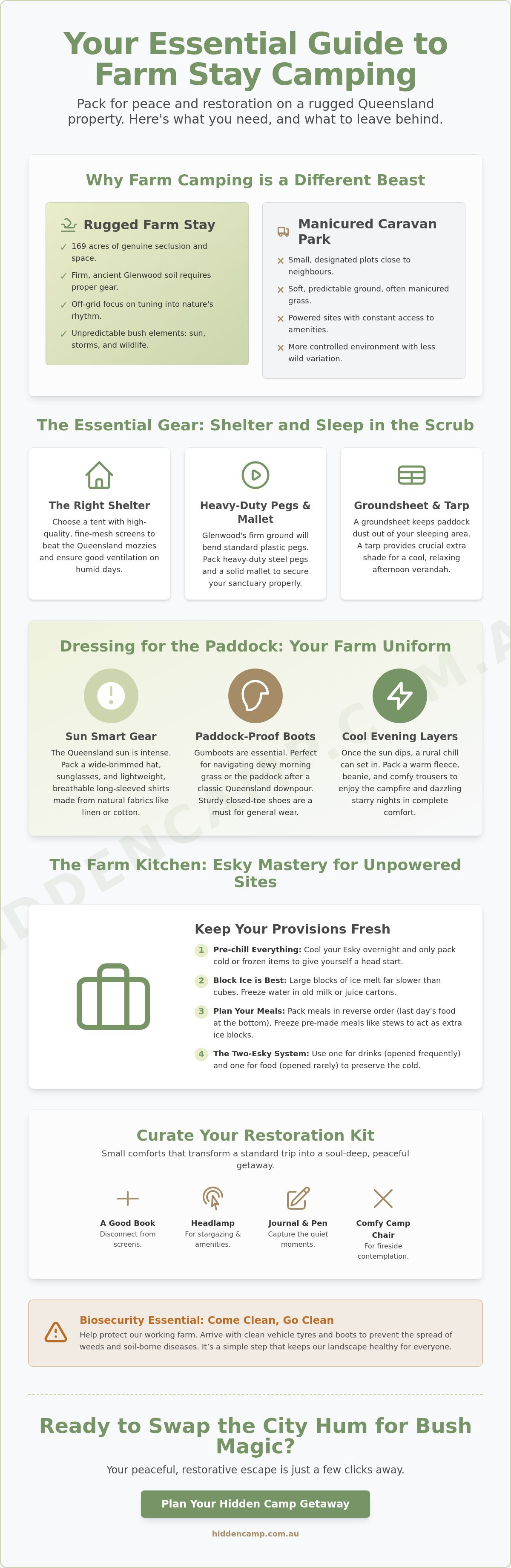
Understand the difference between a manicured caravan park and the rugged, off-grid reality of a 169-acre Queensland property.
Learn exactly what to pack for farm stay camping to ensure you are prepared for firm Glenwood soil and local insects without overfilling your car boot.
Prepare your "Farm Uniform" with breathable fabrics for the sun and essential gumboots for navigating the paddock after a classic Queensland downpour.
Master the art of Esky management and meal planning to keep your provisions fresh and your experience stress-free at an unpowered campsite.
Curate a "Restoration Kit" filled with small comforts that transform a standard trip into a soul-deep, peaceful getaway under the stars.
Table of Contents
Why Farm Stay Camping in Queensland Requires a Unique Packing Strategy
A farm stay isn't just another night under canvas. While Camping as a recreational activity has deep roots in the Australian identity, the rural farm experience is a different beast entirely from the manicured caravan parks dotting the coast. Here on our 169-acre property in Glenwood, you aren't squeezing into a small plot next to a noisy generator. You're stepping into a living, breathing landscape. This means your strategy for what to pack for farm stay camping needs to account for varying terrain, genuine seclusion, and the wonderful unpredictability of the bush.
Choosing a restorative escape means embracing a "less is more" philosophy. When you're surrounded by rolling hills and ancient trees, a car boot stuffed with unnecessary gadgets only creates mental clutter. The goal is a balance between rugged utility and personal comfort. You need gear that works hard so you don't have to. It's about bringing the right items to keep you safe and dry, while leaving behind the digital noise that follows us from the city. Think of your packing list as the foundation for your peace of mind.
The Off-Grid Factor: Unpowered vs. Powered Sites
If you've booked one of our unpowered campsites, your packing list requires a bit more intention. You are moving from being "plugged in" to being "tuned in" to the natural rhythm of the day. Without the hum of a fridge or the glow of a TV, you'll notice things you usually miss. The lack of light pollution means the stars are dazzling; however, it also means you'll want a reliable headlamp for that midnight stroll to the amenities. For those on powered sites, you have a few more luxuries at your fingertips, but the spirit of the stay remains the same: simple, honest, and connected to the land.
Queensland Weather: The Great Decider
The Maryborough region is famous for its beautiful climate, but it demands respect. You might spend the afternoon in light linen, soaking up the warmth, only to find a crisp rural chill settling over the paddock once the sun dips. Sudden summer storms can also roll through with surprising energy. Prioritising high-quality ventilation in your shelter choice is vital. You want a tent that breathes during a humid afternoon but stands firm and dry if a classic Queensland downpour decides to pay a visit. Preparing for these transitions ensures your focus stays on the campfire, not on being uncomfortable.
The Essential Gear: Shelter and Sleep in the Scrub
Setting up camp on a working property requires a thoughtful shift in your gear selection. When you're deciding what to pack for farm stay camping, remember that your shelter is your sanctuary. Unlike the soft, sandy loam of a coastal site, the Glenwood soil is ancient and firm. Those plastic pegs that came with your tent? They likely won't survive the first five minutes. You'll need heavy-duty steel pegs and a solid mallet to secure your home for the night. This level of preparation is a key part of following farm safety guidelines for visitors, ensuring your structure remains stable against the afternoon gusts that occasionally sweep across the ridges.
The Queensland mozzie is another factor to respect. A tent with high-quality, fine-mesh fly screens is non-negotiable. It allows the evening breeze to cool your space while keeping the local insects at bay. If you haven't secured your spot yet, exploring our unpowered campsites is a beautiful way to start planning your rustic setup. Having the right gear means you can focus on the sunset rather than battling the elements.
Shelter Specifics for the Farm
A groundsheet is your best friend in the bush. It acts as a vital barrier against the fine paddock dust, keeping your sleeping area clean and grit-free. If you're setting up in an open area, consider a tarp for extra shade. It creates a cool verandah space where you can sit and watch the light change over the hills without the direct bite of the sun. This extra layer of protection makes a world of difference during a long, lazy afternoon.
Sleeping for Restoration
Sleep is where the true restoration happens. While air mattresses are popular, they can be temperamental on the natural undulations of a paddock. A high-quality self-inflating mat often provides better stability and insulation from the ground. Even in Queensland, winter nights in the bush can be surprisingly crisp. Check your sleeping bag rating; you'll want something that handles a drop to 5 or 10 degrees Celsius comfortably. Don't forget your pillow from home. It's a small luxury that makes a massive difference to your rest.
Finish your kit with a 'Good Night' bag. Include earplugs to soften the early morning chorus of roosters or the lowing of cattle. A high-lumen torch is also essential. When the sun goes down, the darkness is absolute. A reliable light makes the walk to the amenities or a late-night check on the campfire safe and easy. These small items ensure your night is as peaceful as your day.
Dressing for the Paddock: Clothing and Footwear
Stepping out of your car and onto the red earth of Glenwood feels like a deep, cooling breath. To keep that feeling of relief alive, your clothing needs to work with the landscape rather than against it. Deciding what to pack for farm stay camping often starts with the clothes on your back. Forget the synthetic gym wear or heavy denims that trap heat. Instead, embrace the "Farm Uniform" of natural, breathable fabrics like cotton or linen. These materials allow air to circulate, helping you manage the humidity while providing a vital barrier against the sun.
Think of your clothing in layers. While the days are often golden and warm, the temperature in rural Queensland can drop quickly once the stars come out. A lightweight wool jumper or a versatile puffer vest is essential for those quiet moments by the campfire. You want pieces that you can easily peel off as the morning mist lifts and put back on as the kookaburras start their evening chorus. This simple approach ensures you stay comfortable from the first light of dawn until the last ember of the fire fades.
Footwear: From Campfire to Creek
Your choice of shoes can make or break your experience in the scrub. Sturdy, closed-toe boots are non-negotiable for wandering through the paddock or exploring the long grass. They protect your feet from uneven ground and the occasional stray stick. While thongs are perfect for a quick trip to the shower block, they offer little support for the 169 acres of terrain we have here. If a classic Glenwood downpour arrives, you'll be incredibly grateful for a pair of gumboots. They turn a muddy trek into a fun adventure. Don't forget to pack more socks than you think you'll need. Fresh, dry socks are a simple luxury that keeps your feet happy after a day of discovery.
Sun and Bug Protection
The Queensland sun is fierce; it demands respect even on overcast days. A wide-brimmed hat is far superior to a standard baseball cap because it protects your ears and the back of your neck. Pair this with a high-quality, broad-spectrum SPF that's designed to stay on while you're active. When it's time for the "Golden Hour," the local midges and mozzies might decide to join the party. We recommend a repellent that works for you, whether that's a natural lemon eucalyptus oil or a stronger DEET-based spray. Keeping these essentials in a small, accessible bag means you can stay protected without having to rummage through your entire kit.
The Farm Kitchen: Provisions for an Authentic Experience
There's a particular kind of magic in a meal cooked over an open flame as the sun dips below the Glenwood horizon. When you're away from the convenience of a modern kitchen, the rhythm of preparing food becomes a central part of the restorative experience. Knowing what to pack for farm stay camping in terms of provisions is the difference between a relaxing feast and a stressful scramble. It's about choosing ingredients that travel well and gear that simplifies your evening rather than complicating it. Simple is almost always better.
A successful unpowered campsite Queensland stay relies heavily on a solid meal plan. Think about one-pot wonders. A hearty stew or a simple pasta dish requires less water for cleanup and fewer burners to manage. If you're ready to experience this back-to-basics lifestyle, you can book your unpowered site here and start planning your campfire menu today. Taking the time to prep at home means more time sitting by the fire later.
The Esky Strategy
Managing a cooler in the Queensland heat is an art form. Crushed ice is fine for a quick afternoon barbie, but for a multi-day farm stay, block ice is essential. It has less surface area and melts significantly slower, keeping your milk and meat at a safe temperature for longer. Organise your Esky with logic. Keep the items you need frequently, like drinks or snacks, in a separate, smaller cooler. This prevents the main food Esky from losing its chill every time someone reaches for a cold beverage.
Try pre-freezing your meals before you leave. A frozen container of bolognaise sauce or a marinated chicken breast acts as a secondary ice brick for the first twenty-four hours. As it thaws, it becomes a ready-to-heat dinner. Always pack your bread and dry goods in airtight plastic containers to prevent them from becoming a soggy mess as the ice eventually melts. It's these small tactical choices that keep your kitchen running smoothly in the bush.
Cooking and Cleanup
Drinking water is your most critical provision. Never assume there will be a tap exactly where you need it. We recommend bringing 5 to 10 litres of potable water per person, per day. This covers your hydration, cooking needs, and the vital morning coffee. Using a simple gas camp stove is often more reliable than relying solely on a campfire, especially if a sudden shower dampens your wood supply. A cast-iron skillet or a Dutch oven is perfect for even heat distribution over coals if you do decide to cook with fire.
Cleanup should be quick and respectful. A "Wash-Up" kit with two collapsible tubs, a sponge, and biodegradable soap makes the task easy. Remember that on a working farm, "leave no trace" isn't just a slogan; it's a necessity for the health of our livestock and the land. All greywater should be disposed of away from watercourses, and every scrap of rubbish must go home with you. This ensures the paddock remains as pristine for the next guest as it was for you.
The Restoration Kit: Small Extras for a Hidden Camp Stay
Once the tent is pitched and the Esky is settled, the real work of restoration begins. This final layer of what to pack for farm stay camping isn't about survival; it's about enrichment. Pack for the person you want to be when the world goes quiet. A leather-bound journal, a sketchbook for capturing the curve of the hills, or that thick novel you've been moving from bedside table to shelf for a year. These are the tools for a deeper kind of recovery. They help you process the silence of the Glenwood scrub and give your mind a place to land.
Don't forget the "Campfire Atmosphere" kit. A bag of marshmallows for the kids, a simple deck of cards for lantern-lit games, and a warm, woollen rug to wrap around your shoulders. Safety is part of that peace of mind. A snake bite kit is a smart, "just in case" addition to any Australian bush trip. While you likely won't need it, knowing it's in your first aid kit allows you to relax. Finally, keep your camera and spare batteries handy. The sunsets here turn the sky into a bruised palette of purple and gold. You'll want to take a piece of that magic home with you.
Mental Unplugging
There is a unique joy in leaving the digital world behind. A physical map or a printed book feels more grounded than a flickering screen in the middle of a paddock. For those who enjoy sharing their passion for the outdoors, Adventurerz offers a wonderful community hub for enthusiasts of remote travel and camping. Bring a pair of binoculars. They are perfect for spotting the local birdlife or watching the cattle graze on the far ridges. Most importantly, bring a truly comfortable camp chair. It is your throne for the art of "doing nothing." Sit. Listen. Let the landscape do the talking while you simply exist in the moment.
Final Checklist Triage
Before you zip up the last bag, run through a quick triage. People often forget the smallest things that have the biggest impact. Based on our experience, the top items that go missing are can openers, spare batteries for the torch, bin liners for your "leave no trace" cleanup, and extra socks. A small "arrival bag" is also a lifesaver. Keep your headlamps, a bottle of water, and your mallet right at the top of your gear. It makes your first thirty minutes on the property seamless and stress-free.
You've done the prep. You've mastered the checklist. Now, all that's left is to turn the key and head north. Book your Glenwood escape today and discover how a little bit of preparation leads to a lot of peace. We can't wait to welcome you to the paddock.
Your Journey to Restoration Starts Here
Preparing for the bush doesn't have to be a source of stress. By now, you've discovered that the secret to a successful trip lies in the balance between rugged utility and those small, soul-soothing comforts. You understand how to handle the firm Glenwood soil, the importance of block ice for your Esky, and why breathable fabrics are your best friend under the Queensland sun. Mastering the art of what to pack for farm stay camping means you can finally stop worrying about the 'what ifs' and start looking forward to the quiet.
Our 169 acres of secluded scrub are waiting for you. Whether you're setting up at one of our unpowered sites or tucking into one of our cosy tiny houses, you'll find a space that's family-operated and unpretentiously authentic. It's a place where the only schedule is the rising sun and the evening campfire. Escape the city and book your restorative farm stay at Hidden Camp today. We've got the paddock ready; all you need to do is pack the car and come say hello. Your peaceful getaway is closer than you think.
Common Questions About Your Glenwood Getaway
Do I need to bring my own firewood for a farm stay?
You should bring your own seasoned firewood or check with us before arrival to see if we have bundles available for purchase. Collecting fallen timber from the paddock might seem like part of the adventure, but it's important to leave those branches as habitat for our local wildlife. Always check the current fire ban status with the Queensland Fire Department before you light a match to ensure everyone stays safe.
Is there drinking water available at unpowered campsites?
You must bring your own potable water for drinking and cooking when staying at our unpowered sites. While we have water available for washing up in certain areas, it isn't treated for consumption. We recommend packing at least 5 to 10 litres per person for each day of your stay to ensure you remain hydrated in the Queensland heat, especially if you plan on exploring the ridges.
What kind of shoes are best for walking around a Queensland farm?
Sturdy, closed-toe boots are the best choice for navigating the uneven terrain and long grass of a working farm. They protect you from stray sticks, prickly weeds, and the occasional bit of mud. Keep a pair of thongs or slip-ons handy for the shower block; however, for wandering the 169 acres of scrub, you'll want the support and protection of a solid work boot.
Can I bring my dog to a farm stay camping trip?
You should check our specific booking terms regarding pets before you set off on your journey. Many farm stays allow dogs, but they must remain under your control to protect the local livestock and wildlife. If you do bring a furry friend, remember to pack their bedding, a sturdy lead, and enough bags to ensure you leave the paddock exactly as you found it.
How do I keep my food cold without power for three days?
Use block ice instead of crushed ice because it has less surface area and melts much slower, often lasting the full three days if your Esky is well-insulated. When deciding what to pack for farm stay camping, consider pre-freezing your Saturday and Sunday meals to act as extra ice bricks. Keep your cooler in the deepest shade and limit the number of times you open it to preserve the chill.
What happens if it rains during my farm stay?
Rain in Glenwood is often a welcome relief for the land, so we recommend packing a heavy-duty tarp and a pair of gumboots just in case. Our sites are chosen for their drainage, but a sudden Queensland downpour can make the grass slippery. Having a dry, sheltered space to retreat to with a good book makes a rainy afternoon feel like a cosy, restorative part of your stay.
Are there specific items I should pack for a tiny house stay vs. camping?
Our self-contained tiny houses provide most of the essentials like bedding and basic kitchenware, so your packing list will be much lighter than a camping trip. When staying in a tiny house, you mainly need to focus on your personal items, food, and sturdy outdoor clothing. For camping, you'll need to bring your entire shelter and sleep system as outlined in our guide on what to pack for farm stay camping.
Do I need a 4WD to access farm stay campsites in Glenwood?
You don't typically need a 4WD to access our main campsites, as most of our tracks are manageable for a standard 2WD or SUV in dry conditions. However, if there has been significant rain, the tracks can become soft and more challenging. It's always a good idea to check the local weather forecast and property conditions with us before you begin your drive to the farm.


Comments